Quick Answer:
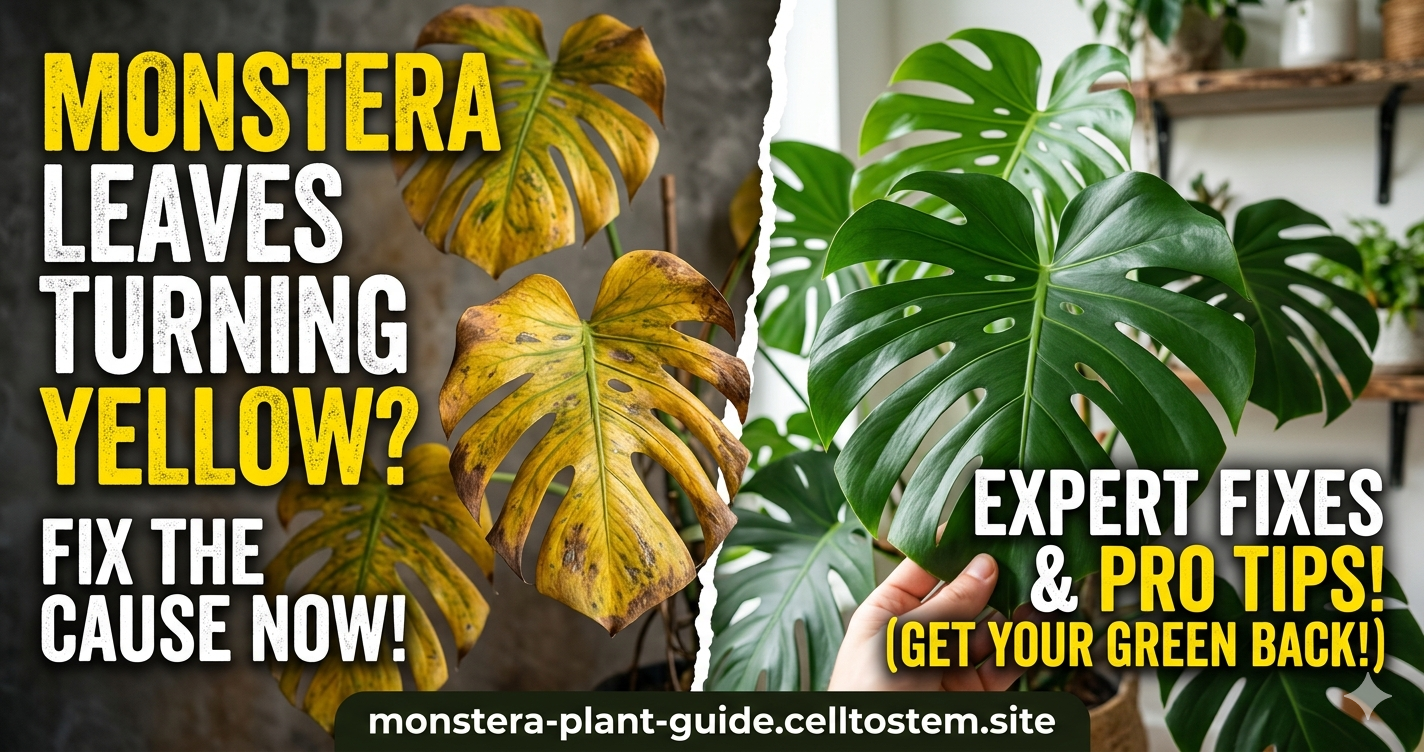
Monstera leaves usually turn yellow due to overwatering, which leads to oxygen deprivation or root rot. Other common culprits include low light, nutrient deficiencies (chlorosis), or common pests like spider mites. To fix it, check the soil moisture, ensure bright indirect light, and only water when the top 2–3 inches of soil are dry.
My Journey with the “Swiss Cheese” Struggle
I remember the first time I brought home a Monstera deliciosa. It was huge, glossy, and cost me a week’s grocery budget. For three months, we were best friends. Then, I woke up to a sight that every plant parent dreads: a bottom leaf turning a sickly, pale lemon color.
I panicked. I did what most beginners do—I gave it more water, thinking it was thirsty. That was my first big mistake. Two weeks later, three more leaves were yellowing, and the soil smelled like a swamp. I almost lost that plant, but that failure taught me more about monstera leaves turning yellow causes than any textbook ever could.
Today, I’m sharing the “dirt” on what actually works. We aren’t just looking at a list of problems; we are looking at how to read your plant’s language.
The #1 Culprit: The Watering Paradox
If I had a dollar for every time overwatering caused monstera deliciosa yellow leaves, I’d own a greenhouse in the South of France.
Overwatered Monstera Symptoms
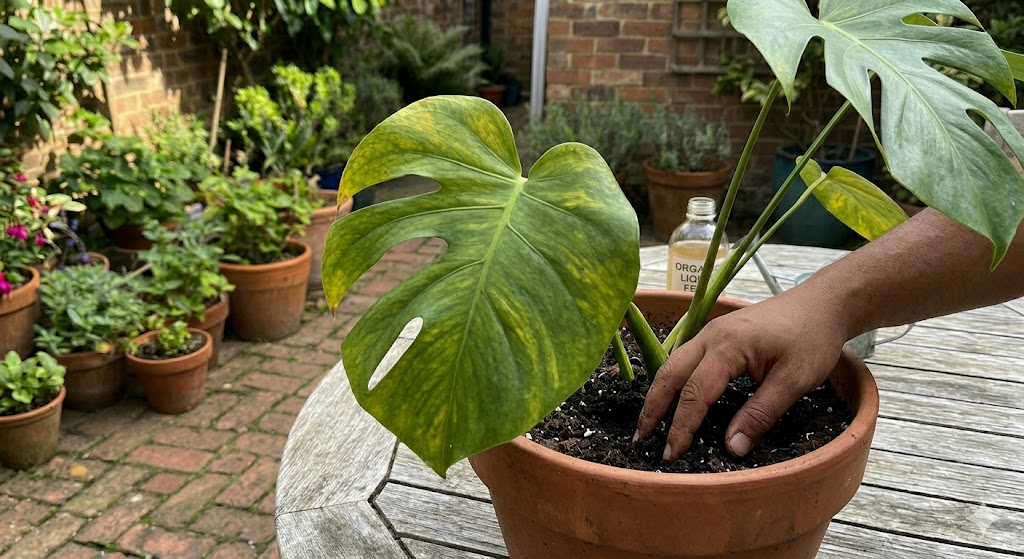
When you overwater, the roots literally suffocate. They need oxygen just as much as water. If the soil is constantly wet, the roots stop “breathing,” and the lower leaves start to turn a soft, limp yellow. You might also notice brown, mushy spots, which are classic overwatered monstera symptoms.
Through trial and error, I found the best watering schedule for monstera isn’t a “schedule” at all—it’s an observation. I use the “finger test.” Stick your finger two inches deep into the soil. If it feels damp, walk away. If it’s dry, it’s time for a drink.
Dealing with the Ultimate Villain: Root Rot
If you’ve ignored the yellow leaves and the soil stays wet, you’re likely facing a monstera fungal infection. This leads to the dreaded root rot.
The best way to treat monstera root rot is a bit like surgery. You have to take the plant out of the pot, wash the roots, and snip away anything that looks black or feels slimy. I once saved a “rescue” Monstera by soaking the remaining healthy roots in a diluted hydrogen peroxide solution before repotting. It felt extreme, but it worked.
The Foundation: Soil and Pots
To prevent this, you need the best soil mix for monstera. Don’t just use standard potting soil; it holds too much water. I swear by a “chunky” mix:
- 40% High-quality potting soil
- 30% Orchid bark (for aeration)
- 20% Perlite
- 10% Horticultural charcoal or worm castings
Pair this with the best pot for monstera drainage. I always recommend terracotta or a plastic nursery pot tucked inside a decorative one. If your pot doesn’t have a hole at the bottom, your Monstera is living on borrowed time.
Lighting: The Goldilocks Zone
Sometimes yellowing isn’t about water; it’s about energy. If your plant is in a dark corner, it can’t photosynthesize enough to support all its leaves. The plant will “sacrifice” the older, smaller leaves to save the new growth.
On the flip side, monstera sunburn is real. I once moved my Monstera to a south-facing balcony in July. Within two days, the leaves had bleached, crispy yellow and white patches.
The best light conditions for monstera are “bright, indirect light.” Think of a spot where the plant can see the sky but can’t see the actual sun. A few feet away from an east or west-facing window is usually the “Goldilocks” zone.
Nutrient Needs and “The Hunger Yellow”
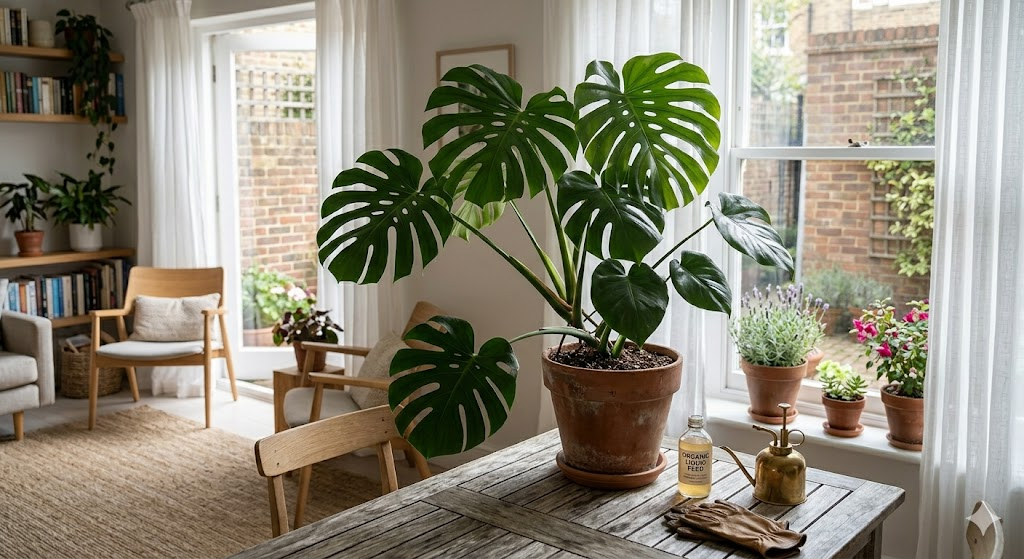
Have you noticed your leaves turning yellow but the veins stay green? That’s called monstera chlorosis. It’s basically your plant telling you it’s hungry for magnesium or nitrogen.
I used to be scared of fertilizers because I feared monstera nutrient burn (which shows up as crispy brown edges on yellowing leaves). However, I learned that the best fertilizer for monstera yellow leaves is a balanced, liquid 20-20-20 formula diluted to half-strength. Feed it once a month during the spring and summer. In the winter? Let it rest.
Humidity and Temperature Stress
Monsteras are tropical babies. They love the air to feel like a warm hug. If your home is too dry, you’ll see underwatered monstera signs, like curling leaves with yellow edges.
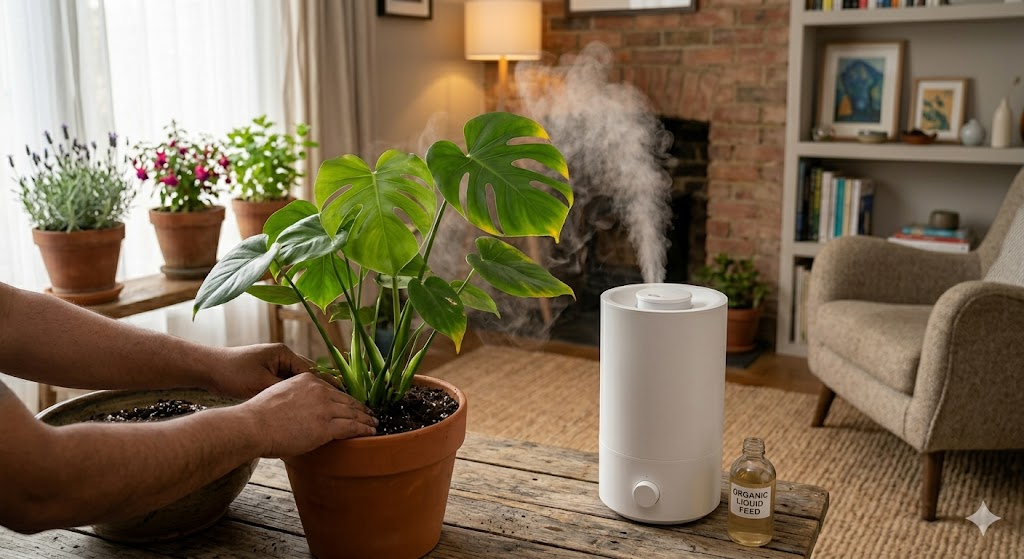
The best humidity level for monstera is between 50% and 60%. I struggled with this during the winter when the heater was on. I tried misting, but honestly? Misting is a myth. It only raises humidity for about ten minutes. I eventually bought a small humidifier, and the difference was night and day.
Also, watch out for monstera transplant shock. If you just moved your plant or repotted it, it might drop a leaf or two. Don’t panic. Just keep the conditions stable and let it adjust.
The Uninvited Guests: Pests
If you see tiny yellow specks or a mottled appearance on the leaves, look closer. You might find monstera pest mites (spider mites) or thrips. These tiny vampires suck the sap out of the leaves, causing them to lose color.
My best pest control for monstera is a two-step punch:
- Wipe the leaves: Use a damp cloth with a tiny bit of dish soap to physically remove the bugs.
- Neem Oil: Spray a neem oil solution every two for weeks until the “speckling” stops.
Maintenance: When to Cut and When to Move
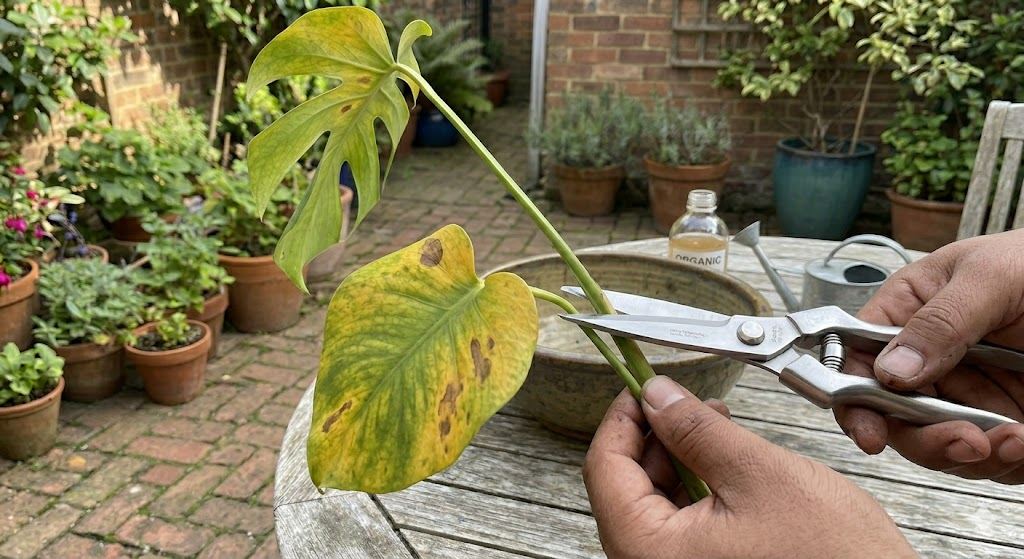
One question I get asked all the time is: “Should I cut the yellow leaf off?” The answer is usually yes. A leaf that is more than 50% yellow will not turn green again. By using the best pruning method for yellow leaves—snipping the stem near the main vine with sterilized shears—you allow the plant to stop wasting energy on a dying limb.
When to Upgrade the Home
If your plant is yellowing and you see roots poking out of the bottom, it’s root-bound. The best time to repot monstera is early spring. Choose a pot that is only 2 inches wider than the current one. Going too big leads back to that overwatering problem we discussed earlier!
Troubleshooting Summary Table
| Symptom | Likely Cause | Quick Fix |
|---|---|---|
| Yellowing lower leaves + Wet soil | Overwatering | Check for root rot; dry out soil. |
| Yellow leaves + “Webbing” | Spider Mites | Wipe leaves; apply Neem oil. |
| Yellow patches + Direct Sun | Sunburn | Move to indirect light. |
| Pale yellow + Green veins | Chlorosis | Apply balanced fertilizer. |
| Yellow edges + Dry soil | Underwatering | Deep soak and increase humidity. |
Final Thoughts: Listen to Your Plant
Your Monstera is a living, breathing thing. It’s going to have bad days. I’ve killed leaves, I’ve over-fertilized, and I’ve definitely forgotten to water. But every yellow leaf is just a data point.
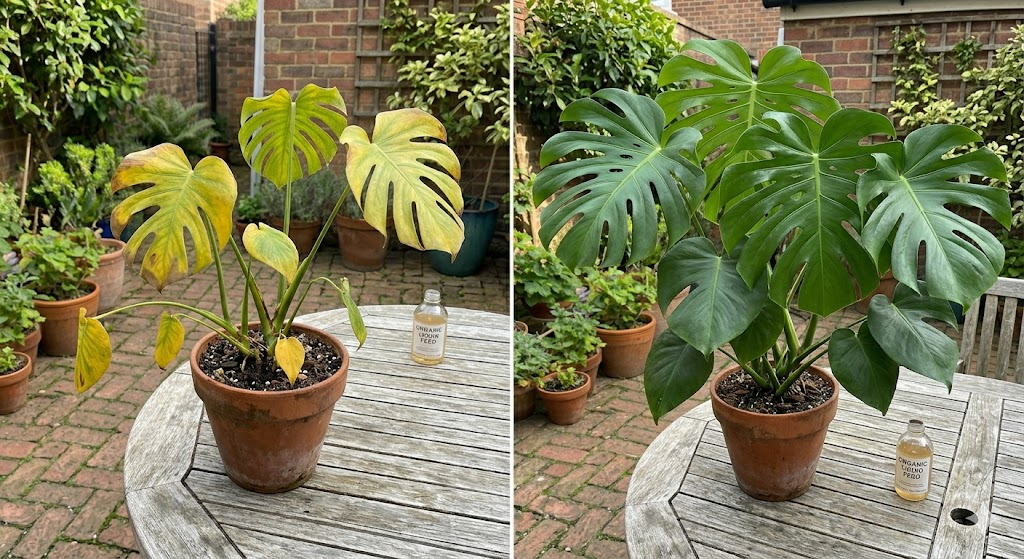
When you see monstera leaves turning yellow, don’t see it as a failure. See it as a conversation. Your plant is telling you something about its environment. Change one variable at a time, be patient, and soon you’ll see those iconic, deep green fenestrations again.
Frequently Asked Questions
1. Can a yellow Monstera leaf turn green again?
Unfortunately, no. Once the chlorophyll has broken down to that extent, the leaf is on a one-way trip. It’s best to prune it so the plant can focus on new, healthy growth.
2. Is tap water okay for my Monstera?
Sometimes. If your tap water has a lot of chlorine or fluoride, it can cause “salt buildup,” leading to yellow tips. I let my tap water sit out overnight before using it, or I use filtered water.
3. How do I know if it’s a fungal spot or just a yellow leaf?
A monstera leaf spot disease usually has a yellow “halo” around a dark brown or black center. General yellowing from watering is usually more uniform across the whole leaf.
4. How often should I fertilize?
During the growing season (Spring/Summer), every 4-6 weeks is perfect. Stop entirely in the winter when the plant goes dormant.
5. What if only the new leaves are yellow?
If new growth is coming out pale or yellow, it’s almost always a nutrient issue or a severe light deficiency. Check your fertilizer routine!
Need more help diagnosing your plant? You can find more specific guides by searching for Monstera Care Tips on Google to keep your indoor jungle thriving!